Owl Floral Mandala Tumbler: A Designer's Review
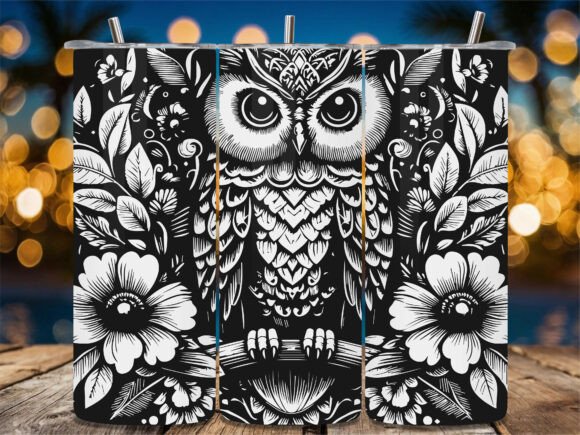
As a designer who spends more time staring at stitch maps than most people spend on their phones, I approach every new digital embroidery file with a mix of excitement and skepticism. When I first pulled up the Owl Floral Mandala Tumbler, my initial reaction was one of intrigue regarding its layout. While the product description markets this specifically as an engraving laser wrap for Stanley-style tumblers, my brain immediately began translating those vector lines into thread paths. There is a distinct visual language here that bridges the gap between Crafts and high-end Graphics, making it a fascinating candidate for adaptation into a physical embroidery project.
The Visual Personality and Mood
The first thing that strikes you about the Owl Floral Mandala Tumbler is its symmetry. Mandalas are inherently balancing, but adding the owl motif introduces a character element that softens the geometric rigidity. The design feels whimsical yet structured, creating a mood that is perfect for boutique branding or personalized gifts. In a real-world scenario, I can easily imagine this translated onto a heavy-weight canvas tote bag design or the chest pocket of a fleece-lined sweatshirt. The floral elements surrounding the central owl figure provide excellent opportunities for playing with thread colors, allowing a maker to customize the piece for specific seasons or customer preferences.
However, because this asset originates as a laser engraving file, the detail level is incredibly high. For an embroiderer, this presents both an opportunity and a challenge. The fine lines that look crisp on a metal tumbler via laser might need simplification when converted to satin stitch or fill stitch on fabric. If you are planning to use this for a handmade product, you must evaluate whether the intricate floral petals will hold up under the tension of the needle or if they will become a dense blob of thread.
Real-World Application Scenarios
Let's talk about how this design performs in actual production environments. Suppose you are an Etsy seller preparing for the holiday rush. You have a client requesting a set of matching aprons for a baking workshop. The Owl Floral Mandala Tumbler could be a stunning centerpiece for this custom apparel. The circular nature of the mandala fits perfectly within a standard round hoop, making it ideal for the lower front panel of an apron or the center of a pillow cover.
For those running a small shop product line, versatility is key. This design has the potential to work well as an embroidered patch. By digitizing the outer edges with a tight merrow border and using a cut-away stabilizer, you could create a durable accessory that customers can iron onto jackets or bags. The "owl" theme also leans heavily into the nursery market. With softer pastels, this could serve as beautiful baby embroidery on a receiving blanket or a bib, provided the stitch density is reduced to ensure comfort against sensitive skin.
I also see potential in the realm of holiday embroidery. By swapping the traditional greens and browns for reds, golds, and silvers, this mandala transforms into a sophisticated ornament design or a festive tea towel. The key here is recognizing that while the source file is a laser graphic, the finished product in thread relies entirely on your ability to interpret those lines into tangible texture.
Technical Considerations and Fabric Choices
Before you commit to stitching this on a client's garment, there are critical technical factors to consider. Since the original file is designed for a seamless wrap on a curved tumbler, the aspect ratio is wide. If you are adapting this for a sweatshirt embroidery project, you may need to crop the design or re-scale it to fit standard hoop sizes without losing the integrity of the mandala's circle.
Caution is advised when working with textured fabrics. If you attempt this on a waffle knit or a highly textured linen, the fine details of the floral mandala might get lost. Similarly, stretchy fabrics like jersey knits require a robust stabilizing strategy. Without proper support, the stitch density of a complex mandala can cause the fabric to pucker, ruining the symmetry that makes the design appealing in the first place.
Dark fabrics present another hurdle. The original laser file likely relies on contrast between the engraved area and the metal. In embroidery, you cannot simply "engrave" a dark shirt; you must build up layers of thread. Ensure your digitized version includes an appropriate underlay to prevent the dark fabric from peeking through the lighter floral elements. If the design includes tiny lettering or extremely small corners, these areas often fail on cap embroidery due to the curvature of the buckram. I would recommend testing this on a flat surface first before attempting it on a cap or hat.
Enhancing Brand Value and Customer Trust
Using a distinctive design like the Owl Floral Mandala Tumbler can significantly elevate your brand consistency. When customers see a cohesive, well-executed design across your printable mockup previews and actual shipped items, it builds trust. It signals that you care about design assets and presentation. A poorly executed version of this design, however, with broken stitches or poor color contrast, can damage your reputation as a professional.
The visual appeal of a mandala lies in its precision. If the stitching clarity is off, the meditative quality of the image is lost. For commercial embroidery projects, consistency is everything. You need to ensure that every time you run this file, the registration is perfect. This is where the choice of thread quality and machine maintenance comes into play. High-sheen threads can mimic the reflective quality of a laser-engraved tumbler, adding a premium feel to the textile version.
Practical Notes for the Embroiderer
If you decide to move forward with adapting this graphic for embroidery, here is my checklist for success:
- Test on Scrap First: Never run a complex mandala on a final garment without a test stitch-out on similar fabric.
- Check Contrast: View your design in black and white to ensure the values separate clearly; if it looks muddy in grayscale, it will look messy in thread.
- Review Stitch Density: Laser files are solid vectors; embroidery needs breathing room. Reduce fill density to prevent stiffness.
- Confirm Hoop Size: Ensure the full width of the mandala fits your available hoops without needing excessive re-hooping.
- Inspect Small Details: Zoom in on the owl's eyes and flower centers. These tiny areas often need manual editing in your digitizing software.
- Stabilizer Selection: For a design this detailed, a cut-away stabilizer is usually safer than tear-away to maintain long-term shape.
- Licensing Check: Since the source is described as a laser file, verify the license terms before selling finished embroidered goods or digital embroidery conversions.
In conclusion, the Owl Floral Mandala Tumbler offers a rich foundation for creative adaptation. While it begins its life as a laser graphic for tumblers, its structural beauty translates well into the world of thread for those willing to put in the digitizing legwork. Whether you are creating a personalized gift for a friend or expanding your craft business inventory, this design holds promise. Just remember that the transition from laser to thread requires a keen eye for detail and a respect for the limitations of fabric. With the right preparation, this mandala can become a standout piece in your portfolio.