Review: Chic Hexagon Dreams Tumbler Wrap for Embroidery
As a designer who spends more time staring at stitch maps than most people spend on their phones, I approach every new design asset with a healthy dose of skepticism. We've all been there: you buy a file that looks stunning in the thumbnail, only to find out it's a nightmare of underlay issues or impossible density once you load it into your machine. Today, I'm taking a close look at the Chic Hexagon Dreams Tumbler Wrap. While the product listing categorizes this under Tumbler Wraps and Graphics, my interest lies in its potential translation from a high-resolution sublimation image to a tangible machine embroidery design or a hybrid application for custom goods.
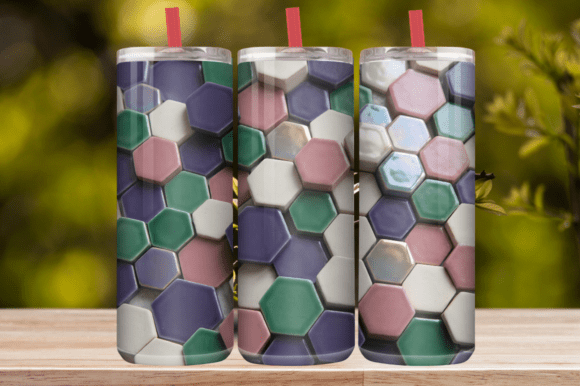
The first thing that strikes me about the Chic Hexagon Dreams Tumbler Wrap is its structural confidence. The hexagon motif is trendy, yes, but it can easily feel sterile if not handled with care. This layout, however, feels organic despite its geometric roots. At 9.3″ x 8.2″ with a resolution of 300 DPI, the source file offers incredible clarity. For us embroiderers, this visual fidelity is crucial even if we aren't printing it directly. It allows us to trace elements accurately for digitizing or to use as a precise placement guide for appliqué work. The mood is modern yet soft, suggesting a versatility that goes far beyond just wrapping a tumbler.
From Screen to Stitch: A Real-World Application
To truly test the viability of this graphic, I imagined a specific client scenario. A boutique owner approached me needing a cohesive line of custom apparel and accessories for a spring market. She wanted something that felt "architectural but approachable." The Chic Hexagon Dreams Tumbler Wrap immediately came to mind as the perfect inspiration board. Instead of using it solely for sublimation, I envisioned adapting its geometry into a large-back sweatshirt embroidery piece.
In this real-life context, the clean lines of the hexagons would translate beautifully into satin stitch borders with a textured fill stitch center. Imagine this design stitched onto a heavyweight French terry hoodie in muted sage green thread against a charcoal fabric. The result would be a high-end handmade product that commands a higher price point than a standard print. The scale of the original graphic (nearly 10 inches wide) means it covers significant real estate, making it ideal for statement pieces like tote bags or pillow covers where detail can be appreciated from a distance.
For an Etsy seller looking to diversify, this design offers a unique opportunity. You could use the graphic as a printed background and overlay specific hexagonal elements with embroidery, creating a mixed-media finished product. This technique adds tactile value and justifies a premium listing price. Whether it's a personalized gift for a wedding party or a small batch of holiday embroidery items, the geometric theme avoids the trap of being too seasonal, ensuring your inventory remains relevant year-round.
Navigating Technical Challenges and Fabric Choices
However, enthusiasm must be tempered with technical reality. Adapting a graphic intended for flat printing into an embroidery project requires careful consideration of stitch density. Geometric shapes with sharp corners, like hexagons, can be tricky. If you are digitizing this yourself or commissioning a conversion, pay close attention to those acute angles. Without proper underlay and tie-off points, you risk puckering or thread breaks, especially on stretchy fabrics.
I would advise caution when applying this motif to thin fabric or highly textured materials. A dense geometric pattern can cause lightweight cotton to warp, ruining the drape of a tote bag design or a baby onesie. For baby embroidery, I would recommend simplifying the design significantly, perhaps using only the outline in a gentle running stitch to maintain softness against sensitive skin. Similarly, if you are attempting this on a curved surface like a cap, the 9.3-inch width is likely too large for a standard front panel. You would need to isolate a single hexagon or a small cluster to fit within a standard hoop size without distortion.
Another critical factor is color contrast. The original graphic relies on vibrant prints, but thread behaves differently. When planning your thread colors, test them against your chosen fabric background. A design that pops on white might disappear on navy if the tonal value isn't adjusted. Always run a test stitch-out on scrap fabric of the same weight and weave as your final material. This step is non-negotiable for maintaining brand consistency and customer trust. There is nothing worse than delivering a small shop product that looks great in the mockup but pulls and distorts after the first wash.
Maximizing Value for Craft Businesses
From a business perspective, the Chic Hexagon Dreams Tumbler Wrap represents more than just a pretty picture; it's a versatile component for commercial embroidery strategies. Its professional aesthetic enhances buyer engagement because it signals quality. Customers are increasingly savvy; they can spot a generic clip-art job from a mile away. The nuanced shading and crisp resolution of this file suggest a level of sophistication that elevates your entire brand perception.
If you are selling digital embroidery files derived from this concept, ensure you clearly communicate the limitations and requirements to your buyers. Specify the recommended stabilizer types—likely a cut-away for stability given the geometric density—and advise on needle sizes. For those using it as a reference for printable mockups, the 300 DPI resolution ensures your marketing materials look sharp on social media and website banners, driving traffic to your listings.
It is also worth noting the licensing implications. Since the source is listed as a sublimation-ready PNG, you must verify the terms before selling stitched versions. Some creators allow physical sales but restrict digital redistribution. Always confirm whether you can sell the embroidered patch or garment, or if the license is strictly for personal use. Protecting your craft business from legal headaches is just as important as the stitching itself.
Final Verdict and Designer Notes
The Chic Hexagon Dreams Tumbler Wrap is a strong contender for designers willing to put in the prep work. It shines brightest when used as a foundational element for larger, statement projects rather than tiny, intricate details. Its strength lies in its modern geometry and high-resolution clarity, which provide an excellent canvas for creative adaptation.
Before you commit to a full production run, keep these practical notes in mind:
- Test First: Always stitch a sample on scrap fabric to check for registration issues and density problems.
- Check Contrast: Ensure your thread choices stand out against the fabric texture, especially if moving away from the original color palette.
- Verify Dimensions: Confirm that the 9.3″ x 8.2″ scale fits your intended hoop and garment area; you may need to resize or crop.
- Stabilizer Matters: Use appropriate stabilizers to prevent the sharp geometric lines from pulling or distorting the fabric.
- Licensing Check: Review the specific license terms regarding commercial use of finished goods versus digital files.
- Mockup Variety: Create black-and-white mockups to evaluate the design's value structure independent of color.
In conclusion, while the Chic Hexagon Dreams Tumbler Wrap starts as a graphic, its potential as a cornerstone for high-quality custom apparel and home decor is significant. With thoughtful digitizing and material selection, it can transform a simple embroidery file concept into a standout handmade product that resonates with customers and builds a loyal following for your brand.