Pink Bow Ghost Halloween Tumbler Wrap: A Designer's Review
As a designer who spends more time staring at stitch maps than most people care to admit, I approach every new machine embroidery design with a healthy mix of excitement and skepticism. We have all been burned by files that look crisp on the screen but turn into a bird's nest of thread on the hoop. So, when I first encountered the Pink Bow Ghost Halloween Tumbler Wrap, my initial reaction was one of curiosity mixed with a practical pause. The title suggests a sublimation or print application, given the "Tumbler Wrap" classification, yet my brain immediately started translating those high-resolution PNG lines into satin stitches and fill patterns. This review is not just about whether the graphic is cute; it is about how this specific aesthetic translates when you are trying to create a tangible, high-value handmade product for a client or your own boutique.
The Visual Personality and Mood
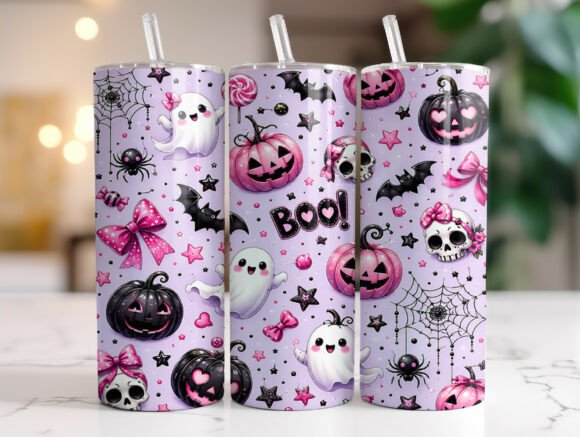
The first thing that strikes me about this design is its playful contradiction. Halloween imagery often leans heavily into the spooky, the grotesque, or the overly dark. However, the inclusion of a pink bow immediately softens the vibe, shifting it toward "kawaii" or boutique-cute territory. For an embroidery project, this is a goldmine. It opens the door to a demographic that might skip the traditional skull-and-crossbones apparel in favor of something whimsical and feminine. The layout, described as a high-resolution PNG at 300 DPI with dimensions of 9.3″ x 8.2″, offers a substantial canvas. In the world of digital embroidery file conversion, size matters. A graphic of this scale gives you the flexibility to scale it down for a pocket logo on a sweatshirt embroidery project or utilize the full width for a statement back piece on a tote bag.
The visual personality here is friendly and approachable. If you are an Etsy seller looking to expand your holiday catalog beyond the usual suspects, this kind of imagery fits perfectly into the "spooky cute" niche that has been dominating social media trends. It feels less like a scary costume prop and more like a seasonal accessory that someone would want to wear throughout October without feeling overwhelmed by gore.
Translating Graphics to Stitch: A Real-World Scenario
Let's walk through a real-life scenario to see how this design holds up. Imagine a customer approaches your small shop requesting a custom personalized gift for her daughter's preschool Halloween party. She wants something unique, not a mass-produced plastic item. You decide to use the ghost motif from the Pink Bow Ghost Halloween Tumbler Wrap to create an embroidered patch that can be ironed onto a denim jacket or stitched directly onto a canvas tote bag design.
Because the source file is a PNG intended for wrapping curved surfaces like tumblers, the edges are likely clean and well-defined, which is crucial when digitizing for embroidery. However, as a reviewer, I must point out that a straight translation from a print graphic to a stitch density map requires careful thought. The "bow" element, for instance, will need precise satin stitch work to maintain its shape and sheen. If the original graphic relies on subtle gradients to show the fold of the ribbon, you will need to decide whether to replicate that with varying thread colors or simplify it for a cleaner, flatter look that reads better from a distance.
In this hypothetical project, the ghost's expression and the bow's placement become the focal points. On a textured fabric like a French terry sweatshirt, the contrast between the smooth stitching of the ghost and the looped fabric texture adds a lovely tactile dimension. This is where the design shines: it has enough detail to be interesting but remains simple enough to avoid becoming a muddy mess when stitched out on thicker materials.
Practical Considerations for Embroidery Application
While the potential is high, there are technical hurdles to clear before hooping up your machine. Since the Pink Bow Ghost Halloween Tumbler Wrap is provided as a graphics file (PNG) rather than a pre-digitized embroidery file, you cannot simply load it into your machine and hit start. You must digitize it first or hire a digitizer. This is a critical distinction for craft business owners. If you are not skilled in digitizing, attempting to auto-digitize a complex PNG can result in poor stitch quality, excessive jump stitches, and a finished product that looks amateurish.
When planning your embroidery project, consider the hoop size. The 9.3-inch width is quite large for standard home embroidery hoops, which often max out at 5x7 inches. You may need to split the design into sections if you intend to stitch it at full size, or more likely, scale it down to fit a 4x4 or 5x7 hoop for apparel applications. Scaling down requires vigilance; tiny details like the ghost's eyes or the knot in the bow can disappear if reduced too far. Always test the design on scrap fabric first. This is non-negotiable. Check how the thread colors interact with your chosen fabric. A white ghost on a black hoodie needs a dense underlay to prevent the dark fabric from peeking through, whereas the same design on a light heather grey might require less coverage.
Fabric choice is another variable. For a baby embroidery item, such as a onesie, you must ensure the stitch count isn't too high, which could make the garment stiff and uncomfortable against sensitive skin. Conversely, for a sturdy canvas tote or a structured cap, you can afford a higher density to ensure durability. If you are applying this to a curved surface like a hat, remember that the perspective changes. What looks centered flat might look off-kilter when worn. The original "tapered" version of the wrap mentioned in the file details hints at curvature adaptation, which is a useful mental reference when positioning your embroidery on rounded items.
Commercial Viability and Brand Consistency
For commercial embroidery ventures, consistency is key. If you plan to sell finished goods featuring this ghost, you need to ensure that every unit looks identical. This means documenting your thread chart, stabilizer type, and needle size. Using the right stabilizer is paramount; a cut-away stabilizer is usually best for garments that will be washed frequently, ensuring the design doesn't pucker over time. Water-soluble stabilizers might suffice for towels or temporary projects, but for a product meant to last, invest in quality backing.
The Pink Bow Ghost Halloween Tumbler Wrap also serves as an excellent asset for creating printable mockups. Even before you stitch a single thread, you can use the high-res PNG to create digital previews for your online store. This allows you to gauge customer interest and secure pre-orders, minimizing your risk. It bridges the gap between digital design assets and physical merchandise beautifully. However, always double-check the licensing terms associated with the download. Just because it is an instant download does not automatically grant unlimited commercial rights for resale as a digital file or even as a finished product. Clarify these terms to protect your small shop product line.
Final Thoughts on Execution
In conclusion, the Pink Bow Ghost Halloween Tumbler Wrap is a versatile graphic with strong potential for translation into the realm of embroidery. Its charm lies in its ability to soften the Halloween edge, making it suitable for a wider audience ranging from toddlers to adults who prefer cute over creepy. However, its success as an embroidered patch or apparel decoration hinges entirely on the skill of the digitization and the thoughtful selection of materials. Do not rush the process. Test your applique design concepts on various fabrics, pay attention to the running stitch outlines versus fill areas, and ensure your tension is perfect. When executed with care, this design can elevate your holiday collection, offering customers a unique, high-quality item that stands out in a sea of generic decorations. It is a reminder that with the right technical approach, a simple graphic can become a cherished heirloom.