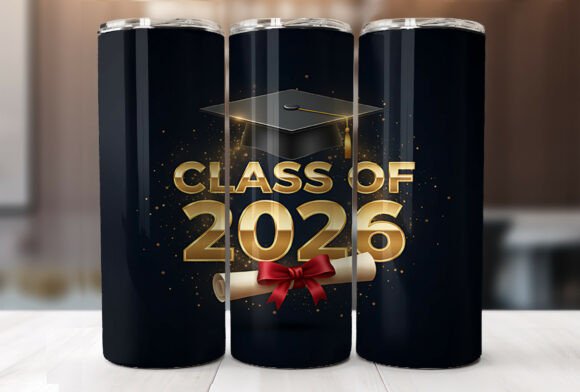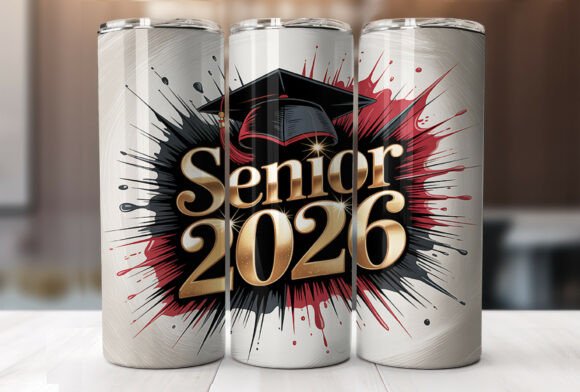
Senior Graduation 2026 Tumbler Wrap: A Designer's Review
As a designer who spends more time staring at stitch maps and fabric swatches than most people care to admit, I approach every new digital embroidery file with a mix of curiosity and skepticism. We have all been there: you buy a design that looks crisp on the screen, only to find out it turns into a bird's nest of thread once it hits the hoop. Recently, I took a close look at the Senior Graduation 2026 20oz Tumbler Wrap. While the product title suggests it is intended for sublimation or vinyl wrapping on drinkware, my brain immediately started translating those high-resolution graphics into potential machine embroidery design applications. This review breaks down how this specific asset performs when we move beyond the tumbler and consider it for real-world stitching projects.
First Impressions: Layout and Visual Personality
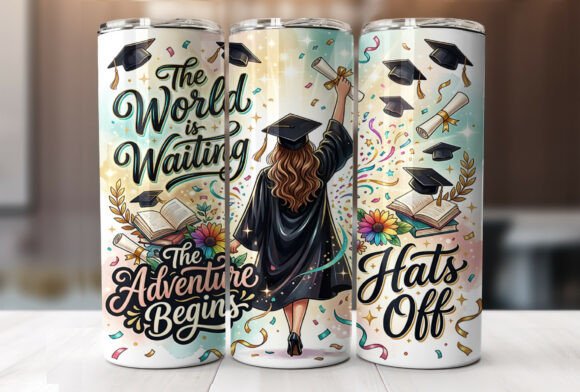
The first thing that strikes me about the Senior Graduation 2026 20oz Tumbler Wrap is its dimensions. At 9.3 by 8.2 inches (2790 by 2460 pixels), this is a substantial graphic. In the world of Tumbler Wraps, this size is perfect for covering a standard 20oz skinny tumbler with room to spare. However, for an embroiderer, these dimensions signal a large-scale project. The layout is clearly designed to wrap around a cylinder, which means the central focal point is strong, but the edges are meant to blend or overlap.
Visually, the design carries the celebratory yet formal mood required for graduation season. It isn't cluttered with unnecessary flourishes that would nightmare-induce any digitizer trying to convert it to stitches. The typography appears bold enough to hold up as a satin stitch column, and the graphical elements possess a clean structure that could translate well into a combination of fill stitch and running stitch details. For a craft business owner, this visual clarity is gold; it means the finished product will look professional rather than muddy.
Translating Graphics to Stitch: Real-World Scenarios
Let's get practical. How do we actually use a file labeled as a tumbler wrap in an embroidery context? I envision a scenario where a client comes in needing a coordinated set of gifts for a graduating senior. They want a custom tumbler (which you can make with the original PNGs) but also want a matching tote bag design or a commemorative sweatshirt embroidery piece. This is where the versatility of the Senior Graduation 2026 20oz Tumbler Wrap shines.
If you were to adapt this graphic for a custom apparel item, such as a heavyweight hoodie or a canvas tote, the scale works beautifully for a full-back design or a large chest pocket feature. Because the source file is a high-resolution graphic, it serves as an excellent reference for creating a custom applique design. You could use the graphic as a template to cut felt or twill, then use a tight satin stitch border to secure it. This approach reduces the total stitch count compared to filling the entire area with thread, resulting in a softer finished product that drapes better on clothing.
For Etsy sellers focusing on boutique branding, this design offers a cohesive look across different mediums. Imagine offering a "Graduation Bundle" that includes a wrapped tumbler and an embroidered cap. While the tumbler uses the straight or tapered PNG directly, the cap would require you to isolate the central "2026" motif. The clean lines of the original Graphics make isolating these elements straightforward, ensuring your small shop product line maintains brand consistency.
Navigating Technical Challenges
However, we must address the elephant in the room: this file is sold as a graphic, not a pre-digitized stitch file. If you attempt to auto-digitize a 9-inch wide image without adjustment, you will run into issues with stitch density. Large areas of solid color in a graphic can translate to thousands of stitches if not managed correctly, leading to fabric puckering and needle breakage.
When working with textured fabrics like Terry cloth towels or stretchy materials like jersey knits for baby embroidery projects, caution is paramount. A design of this magnitude needs careful planning regarding hoop size. Most home machines max out at a 5x7 or 6x10 inch hoop, meaning a project based on the full 9.3-inch width of the Senior Graduation 2026 20oz Tumbler Wrap would require re-hooping or splitting the design. This is a critical consideration for commercial embroidery workflows where speed and accuracy are vital.
Furthermore, tiny lettering often gets lost when scaling graphics down for smaller items like an embroidered patch or a pocket logo. If you plan to shrink this design for a holiday gift like a kitchen towel or a pillow cover, you may need to simplify the text or increase the font weight in your digitizing software to ensure readability after washing. Dark fabrics present another challenge; if the original graphic relies on light colors against a transparent background, you must ensure your thread colors have enough opacity or consider using a white underlay to prevent the fabric tone from altering the design's intent.
Maximizing Value and Professionalism
The true value of the Senior Graduation 2026 20oz Tumbler Wrap lies in its potential as a multi-use asset. For the creative entrepreneur, buying one file that can serve as both a sublimation print and a reference for embroidery doubles your return on investment. It allows you to create printable mockup images for your online store that show customers exactly what the coordinated set will look like, boosting buyer engagement and trust.
From a customer perspective, seeing a matching set of items—where the embroidery on a blanket complements the wrap on their cup—elevates the perceived value of the handmade product. It signals attention to detail and a high level of customization. This kind of cohesion is what builds a reputation for quality, turning one-time buyers into repeat clients for future personalized gift needs, whether for weddings, holidays, or corporate events.
Practical Notes for the Studio
Before you commit this design to a final project, here are a few essential steps I recommend taking in the studio:
- Test on Scrap Fabric: Always stitch out a sample on the same material you intend to use for the final product. This reveals how the stabilizer interacts with the fabric weight.
- Check Thread Contrast: View your digitized version in black and white to ensure the contrast holds up without relying on color cues.
- Verify Licensing: Since this is sold as a graphic for tumbler wraps, confirm with the seller if you have the right to use it as a basis for commercial embroidery sales. Licensing terms can vary significantly between graphic and stitch files.
- Inspect Small Details: Zoom in on the corners and curves of the "2026" text. These areas often require manual tweaking in the digitizing software to prevent thread bunching.
- Consider Fabric Texture: Remember that a design looking sharp on a smooth tumbler might behave differently on a woven tote bag or a fuzzy sweatshirt.
In conclusion, while the Senior Graduation 2026 20oz Tumbler Wrap is marketed for drinkware, its clean geometry and scalable nature make it a hidden gem for the resourceful embroiderer. With the right digitizing adjustments and a clear understanding of its limitations regarding hoop sizes and fabric types, it can be the cornerstone of a stunning, coordinated graduation collection. It is a reminder that in our industry, a little creativity in how we source and adapt our design assets can lead to the most unique and profitable embroidery projects.