Review: Multi-Tasking Knitting Octopus SVG for Embroidery
As a designer who spends more time staring at stitch simulations than I do sleeping, I approach every new digital embroidery file with a mix of excitement and skepticism. We've all been there: you buy a cute graphic, load it into your software, and realize the details are too fine for anything but a display piece, or the lettering is going to turn into a tangled mess after one wash. That's why I took a close look at the Multi-Tasking Knitting Octopus SVG. This isn't just another clipart image; it's a potential asset for your craft business, provided you understand how to translate those vector lines into thread.
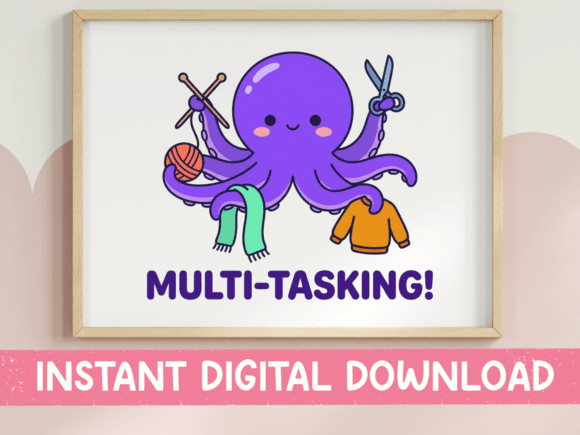
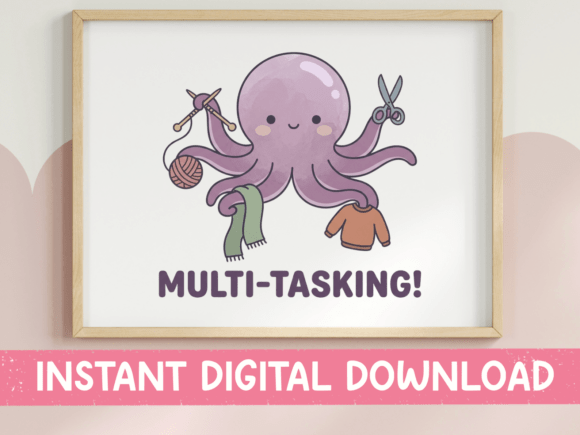
The first thing that strikes me about this design is its personality. It features a cheerful light purple kawaii octopus, which immediately sets a playful, whimsical tone. But what makes it interesting for us as embroiderers is the narrative complexity. This cephalopod isn't just posing; it's busy. It's knitting with yarn and needles, holding scissors, clutching a finished green scarf, and showing off a completed project. Below this busy scene sits the text "Multi-Tasking" in bold, dark lettering. For an embroidery project, this level of activity presents both a challenge and an opportunity. The mood is undeniably cozy and creative, making it a perfect fit for makers who want to celebrate their own hustle.
Visual Breakdown and Stitch Potential
When I visualize this machine embroidery design on actual fabric, my mind goes straight to texture. The octopus itself, being a kawaii style, likely relies on smooth fill stitch areas to create that soft, rounded look. The light purple color suggests a need for high-quality rayon or polyester thread to capture that gentle hue without it looking muddy. However, the real test lies in the accessories. The knitting needles and scissors are small, linear elements. If these are rendered as simple running stitch outlines, they might get lost on textured fabrics like towels or fleece. Ideally, these should have enough weight to stand out, perhaps using a tight satin column for the needles to give them a metallic or wooden appearance.
The typography is the anchor here. "Multi-Tasking" is described as bold and dark, which is excellent news for legibility. In the world of T-Shirt Designs and Graphics, thin fonts often fail when scaled down or stitched on stretchy materials. A bold font ensures that even if the stitch density varies slightly, the message remains clear. The contrast between the dark text and the light purple character creates a nice visual hierarchy, drawing the eye first to the cute character and then grounding it with the caption.
Real-World Application Scenarios
So, where does this actually work? I can see this design shining on a tote bag design for a local yarn shop or a fiber arts festival. Imagine a heavy canvas tote where the octopus is stitched with a slight raise, giving it a tactile quality that customers love to touch. The theme of multi-tasking resonates deeply with parents, students, and small business owners, making it a strong seller for personalized gift markets.
Another strong contender is sweatshirt embroidery. A heather grey or navy crewneck would provide a fantastic backdrop for the light purple octopus. The cozy nature of knitting pairs perfectly with the cozy nature of a sweatshirt. For baby embroidery, this could be adorable on a bib or a onesie, though you would need to be very careful about the scale. You wouldn't want tiny scissors or needle points poking a baby, so checking the minimum size requirements is crucial. If the design allows for simplification, removing the smaller tools might make it safer and more durable for infant wear.
For the Etsy seller or boutique owner, this design offers great versatility for custom apparel. It speaks directly to the "maker" community. Selling this on aprons for craft workshops or patches for knitting bags could create a strong brand identity. The "finished product" appeal is high because it tells a story about the person wearing it—they are creative, busy, and proud of it.
Technical Considerations and Fabric Choices
While the concept is strong, execution is everything. Before you commit to stitching this on a client's expensive garment, you need to consider the fabric texture. On a smooth cotton or poly-blend, the details of the yarn and scarf will pop. However, on a looped towel or a fuzzy fleece, those fine lines might sink in. If you are working with textured fabrics, you may need to increase the stitch count or use a thicker thread weight to ensure the definition remains.
Dark fabrics present another consideration. Since the octopus is light purple, it will contrast well against black or navy, but you must ensure your underlay stitches are sufficient to prevent the dark fabric from peeking through the lighter thread. This is where a good stabilizer becomes your best friend. For stretchy fabrics like t-shirts, a cut-away stabilizer is non-negotiable to prevent distortion over time, especially with a design that has multiple directional elements like the knitting needles and scarf.
Curved surfaces, such as caps, require extra caution. The horizontal layout of the text and the wide stance of the octopus might not wrap well around the front panel of a baseball cap. Unless the design is specifically digitized for hats, I would avoid using it there. It is better suited for flat surfaces like pillow covers, tea towels, or the chest area of a jacket.
Maximizing Value and Professionalism
Using a design like the Multi-Tasking Knitting Octopus SVG correctly can significantly boost your perceived value. When a customer sees clean edges, consistent thread colors, and no puckering, they trust your brand. Conversely, if the tiny scissors turn into a bird's nest of thread, it reflects poorly on your professionalism. This design has the potential to be a flagship item for a small shop product line if treated with care.
To ensure the best finished product, I always recommend creating a printable mockup first. Visualize the design in black and white to check for contrast issues. If the details disappear in grayscale, they will likely disappear in thread. Also, consider the washing instructions you give your clients. Designs with many small, detached elements (like the separate knitting tools) may require gentler washing cycles to maintain their integrity over years of use.
Designer Notes for Success
Before you start stitching, keep these practical tips in mind:
- Test on scraps: Always run a test stitch-out on the same type of fabric you intend to use for the final product. This reveals issues with stitch density and registration.
- Check the hoop size: Ensure the design fits comfortably within your available hoop size without needing to re-hoop, which can cause alignment errors.
- Review the license: If you plan to sell items made with this design, confirm the licensing terms. Some design assets are for personal use only, while others allow for commercial embroidery sales.
- Simplify if needed: Don't be afraid to edit the file. If the scissors are too small for a baby hat, delete them. Adapt the design to suit the specific embroidery file constraints of your machine and project.
- Thread selection: Choose thread colors that match the kawaii aesthetic. Pastels and vibrant primaries usually work best for this style, avoiding overly neon shades unless that is your specific brand vibe.
In conclusion, the Multi-Tasking Knitting Octopus SVG is a charming and relevant design for today's maker market. It bridges the gap between cute aesthetics and a relatable message. With the right attention to technical details like stabilizer choice, fabric compatibility, and stitch optimization, it can become a staple in your portfolio of holiday embroidery gifts or year-round boutique offerings. It's a reminder that even in a digital age, the charm of hand-crafted (or machine-crafted to look handmade) items holds immense value.