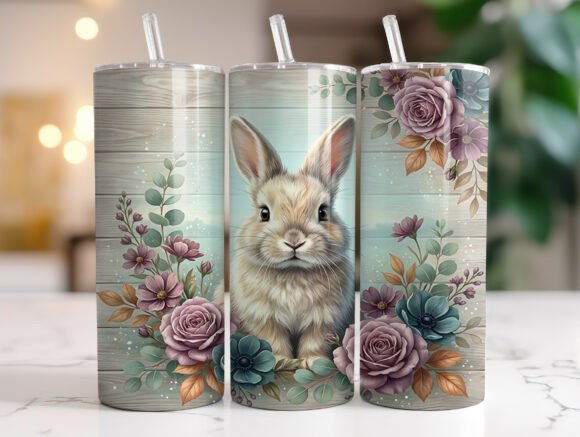
Review: Black and White Easter Bunny Tumbler Design
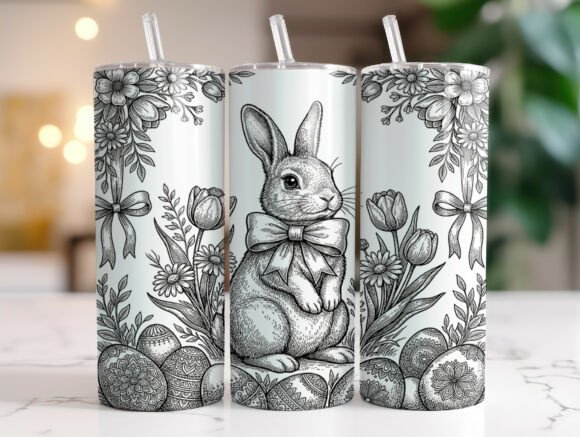
As a designer who spends more time staring at stitch maps than most people spend on their phones, I approach every new digital embroidery file with a mix of excitement and skepticism. When I first pulled up the Black and White Easter Bunny Tumbler design, my initial reaction was one of appreciation for its simplicity. In a market saturated with overly complex, neon-colored, and hyper-detailed spring motifs, this graphic stands out because it knows exactly what it is. It is a bold, high-contrast statement piece that relies on shape and negative space rather than intricate shading.
The product description notes that this is a printable graphic available in straight and tapered PNG formats at 300 DPI. While the listing categorizes it under Tumbler Wraps and Graphics, my mind immediately went to how this translates into a physical machine embroidery design. The clean lines and lack of gradient shading make it an ideal candidate for digitization or direct application in projects where clarity is king. Let's break down how this specific aesthetic performs in real-world scenarios.
The Aesthetic: Minimalism Meets Holiday Cheer
The mood created by the Black and White Easter Bunny Tumbler is modern and versatile. By stripping away color, the design forces the viewer to focus on the silhouette and the character of the bunny. This monochromatic approach is incredibly trendy right now, fitting perfectly into the "farmhouse chic" or "modern minimalist" niches that dominate Etsy and boutique shops.
Visually, the layout feels balanced. The 9.3″ x 8.2″ dimensions suggest a substantial presence, large enough to be the focal point of a garment but contained enough to fit within standard large hoops. For an Etsy seller or craft business owner, this visual personality is a goldmine. It allows you to let the fabric color do the heavy lifting. Imagine this design stitched in white thread on a heather grey sweatshirt, or black thread on a natural canvas tote. The versatility means you aren't locked into a specific color palette for your inventory.
Real-World Application: From Digital File to Finished Product
To truly test the viability of this asset, I envisioned a specific project: a custom order for a local boutique needing holiday embroidery items that appeal to a younger, trend-conscious demographic. They wanted something that wasn't "cute" in a childish way but rather stylish. The Black and White Easter Bunny Tumbler fits this brief perfectly.
If we adapt this graphic for a sweatshirt embroidery project, the solid areas of the design would translate beautifully into dense fill stitches. Because the original file is high-resolution, the edges are crisp, which is crucial when digitizing for satin or fill work. There are no fuzzy pixels to guess at, meaning the resulting stitch path should be clean. For a tote bag design, this graphic would look exceptional as a large back-panel feature. The high contrast ensures readability from a distance, which is essential for wearable advertising or brand recognition.
Consider also the potential for baby embroidery. Parents often shy away from bright, chemical-looking dyes for newborns. A black and white motif on a soft, organic cotton onesie or blanket feels sophisticated and gender-neutral. It elevates the perceived value of the handmade product, making it feel less like a craft fair item and more like a boutique purchase.
Navigating Fabric and Stitch Challenges
However, practical design judgment requires us to look at the pitfalls. While the Black and White Easter Bunny Tumbler is visually striking, its execution depends heavily on your material choices. If you are working with textured fabrics like terry cloth towels or fuzzy fleece, the fine details of a black and white design can get lost. The contrast that makes it pop on smooth cotton might muddy on a high-pile fabric.
Furthermore, if you are digitizing this PNG into an embroidery file, pay close attention to stitch density. Large solid black areas in the original graphic could translate to extremely dense stitching if not managed correctly. This can lead to fabric puckering, especially on stretchy materials like t-shirts or caps. On a curved surface like a cap, a design of this size (over 8 inches) might be too wide for standard hoops, requiring a re-scaling of the image. Always check your hoop size limitations before committing to the full scale.
For dark fabrics, remember that this is a black and white source image. If you intend to stitch it on navy or black garments, you will need to invert the colors in your digitizing software or choose a thread color that provides sufficient contrast, such as silver, gold, or pastel shades, to maintain the visual impact.
Commercial Viability and Brand Consistency
For small shop product lines, consistency is key. The Black and White Easter Bunny Tumbler offers a cohesive look that can tie together an entire collection. You can use the same base design on aprons, pillow covers, and tea towels, simply changing the thread color to match seasonal trends without altering the core asset. This efficiency saves time and strengthens brand identity.
Customer trust is built on the quality of the finished product. A clean, well-executed black and white design signals professionalism. It suggests that the maker cares about composition and modern aesthetics. Conversely, a poorly digitized version with jagged edges or uneven fill would ruin this effect instantly. Therefore, if you are using this as a basis for a commercial embroidery project, testing is non-negotiable.
Designer Notes for Best Results
Before you list this as a personalized gift option or integrate it into your design assets library, here are my practical recommendations:
- Test on Scrap First: Always stitch a sample on the exact fabric you plan to sell. Check how the black and white contrast holds up under your shop's lighting.
- Check Thread Contrast: Ensure your thread colors provide enough difference from the fabric. A dark grey thread on a black shirt will vanish.
- Review Stitch Density: If digitizing, reduce fill density in large areas to prevent stiffness and puckering.
- Stabilizer Selection: For a design with solid areas, a cut-away stabilizer is often safer than tear-away to support the weight of the stitching over time.
- Licensing Verification: The product states it is a digital file for printing. If you intend to sell physical embroidered goods, ensure your license covers commercial use of the derived design. If you are selling the digitized file itself, you must create the stitch file from scratch based on this graphic.
- Mockup Testing: Create printable mockups in both light and dark variations to see which sells better before producing inventory.
In conclusion, the Black and White Easter Bunny Tumbler is a robust starting point for creative entrepreneurs. It bridges the gap between digital graphics and tactile custom apparel. While it requires thoughtful adaptation regarding fabric choice and stitch management, its timeless aesthetic and high-resolution foundation make it a valuable addition to any spring collection. Whether you are creating a single embroidered patch for a jacket or a full line of holiday decor, this design proves that sometimes, less really is more.