Review: Best Teacher Ever Skinny Tumbler Wrap for Craft Pros
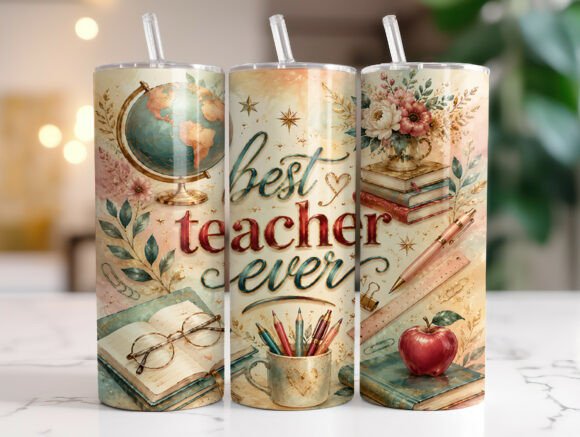
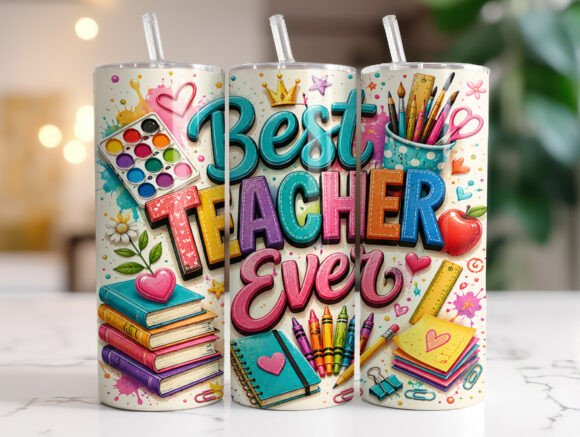
As a designer who spends more time staring at stitch maps than most people spend on their phones, I approach every new digital embroidery file with a mix of optimism and skepticism. We have all been there: you buy a design that looks crisp in the thumbnail, only to find out it's a nightmare of underlay issues or impossible density once it hits the hoop. Today, I am taking a close look at the Best Teacher Ever Skinny Tumbler Wrap. While the product listing categorizes this under Tumbler Wraps and Graphics, my job is to translate those high-resolution PNG assets into something tangible for the craft business world.
The first thing that strikes me about this design is its versatility. The package includes both a straight and a tapered PNG file, optimized at 300 DPI with dimensions of 9.3″ x 8.2″. For those of us working in digital printing for tumblers, this is gold. However, as an embroidery specialist, I immediately started thinking about how to adapt this graphic energy into a machine embroidery design workflow. The layout suggests a bold, celebratory mood perfect for end-of-year gifts, but can it hold up under the needle?
From Screen to Stitch: A Real-World Scenario
Let's set the scene. It is late April, and your inbox is flooding with requests for "Teacher Appreciation Week" items. You need a personalized gift idea that stands out from the sea of generic mugs. You decide to create a limited run of boutique tote bags featuring this theme. The Best Teacher Ever Skinny Tumbler Wrap serves as the visual foundation. Even though it is sold as a sublimation graphic, the clean lines and clear typography make it an excellent reference for creating a custom embroidery project.
When I visualize this concept on a canvas tote bag design, the potential is huge. The phrase "Best Teacher Ever" carries an emotional weight that customers love. If you were to digitize this graphic into an applique design or a dense fill stitch pattern, it would transform a simple bag into a heirloom-quality item. The visual personality is warm and appreciative, avoiding the overly cutesy fonts that sometimes cheapen professional small shop products. This kind of dignity in design builds customer trust and encourages repeat business.
Evaluating Performance on Various Fabrics
In the real world of commercial embroidery, one size does not fit all. Here is how I see this design concept performing across different mediums:
- Sweatshirt Embroidery: On a fleece hoodie, the bold nature of the text would pop beautifully. You would want to use a satin stitch for the lettering to give it that premium, raised look that feels good to the touch.
- Baby Embroidery: For a onesie or baby blanket, you must be careful. The original graphic is sized for a 20oz tumbler, which is quite large. Scaling it down for baby clothes requires checking the stitch density. Too dense, and the fabric will pucker; too light, and the details get lost.
- Embroidered Patch Creation: This is perhaps the strongest use case. Creating a woven or embroidered patch allows you to use the graphic exactly as intended without worrying about garment distortion. Patches are huge right now for Etsy sellers and boutique branding.
- Cap Embroidery: Be cautious here. The curved surface of a cap distorts wide designs. The tapered version of the file might help visualize the curve, but you would need to significantly adjust the digitizing to prevent the text from looking warped.
Technical Considerations for the Maker
Before you commit to stitching this on a client's expensive blazer, there are technical hurdles to clear. Since the source material is a high-res PNG meant for printing, you cannot simply load it into your machine. You must digitize it first. When doing so, pay attention to the thread colors. The original graphic likely uses specific shades to create depth. In embroidery, you need to ensure high contrast between the thread and the fabric texture.
If you are working on dark fabric, you will need a robust underlay, possibly a running stitch border followed by a fill, to prevent the background from showing through. For thin fabrics like linen tea towels or aprons, a heavy stabilizer is non-negotiable. Without it, the tension of the stitches will cause the fabric to gather, ruining the finished product. Always test on scrap fabric first. I cannot stress this enough. What looks perfect on your screen might behave differently on cotton versus polyester blends.
Maximizing Value and Professionalism
Using a well-thought-out concept like the Best Teacher Ever Skinny Tumbler Wrap elevates your brand. It shows that you care about the message, not just the stitch count. When a customer receives a handmade product that features clear, legible, and emotionally resonant text, their perception of value skyrockets. This leads to better reviews and higher engagement on your printable mockup listings.
However, you must be realistic about limitations. Tiny lettering in complex scripts often turns into a blob of thread if the design is too small. If you plan to shrink this for a pocket logo on a shirt, ensure the smallest elements are at least 0.25 inches tall to maintain clarity. Also, consider the washability. Dense areas with poor underlay can lead to thread breakage after multiple washes, which hurts your reputation for quality.
Final Designer Notes and Licensing
Before launching this as a holiday embroidery special or a year-round staple, check the licensing terms provided with the download. Just because you bought the graphic does not automatically grant you the right to resell the digitized embroidery file itself. Usually, you can sell the finished product (the stitched shirt or bag), but redistributing the digital asset is a different story. Confirm this with the seller to protect your craft business.
In conclusion, while the Best Teacher Ever Skinny Tumbler Wrap is marketed for sublimation, its clean design makes it a fantastic candidate for adaptation into the embroidery world. Whether you are making a custom apparel line for a school or creating unique design assets for your online store, the key lies in thoughtful digitizing and material selection. Treat the graphic as a blueprint, respect the limitations of thread and fabric, and you will create something truly special.
Remember, the difference between a good item and a great one is often in the details. Check your hoop size constraints, verify your color contrasts, and always prioritize the durability of the stitch. Happy stitching!